

FLR, But Subversive
How a Late-Night Drama Redefines Rebellion
A Japanese drama, Ladies on Top (女の子が抱いちゃダメですか?), is currently airing on MBS (Mainichi Broadcasting System, Inc). Based on the manga by @nezinameta, an artist who has spent most of her career writing queer romance.
This story gives the lead to a woman who actually wants it. And notably, she is not wearing a corset.
The Story Unfolds Like a Farce
But she is not.
Every time a date tries to perform his masculinity, the scripted moves, the rehearsed gesture, the whole production, she checks out. Not because she's cold, but because she already knows what she desires: a man who yields.
Faced with romance, he tries to lead the way a "real man" is supposed to. Initiates the kiss. Gets on top. Fails, every time.
What he actually wants is to be handled.
The moment Mizuki sees him helpless, something clicks. Not pity. Desire.
A Script Nobody Handed Her
The author @nezinameta said she noticed that female-aggressor romance barely existed in Japanese rankings. Not for a lack of demand, but a lack of creation. Mainstream romance always followed the same blueprint.
In the show, Takayuki imitates the instructions he's been fed: the head-pat, the sudden kiss, the dramatic wall-pin (kabe-don). Standard issue.
The show never labels itself BDSM, yet power dynamics are everywhere.
When Takayuki's ex-girlfriend discovered male-submissive content in his browser history, she broke up with him over it. So in this new relationship, he decides to "get it right."
Takayuki: I want to push you down, Mizuki. Do it like a real man.
Mizuki: I want to push you down too, Takayuki, but I don't know how. Let's have you take the lead today.
When Takayuki tries to push her onto the sofa, something shifts in Mizuki's expression, a flicker of something sly.
She climbs on top.
Mizuki: But control, I'll be taking that.
It's a story about two people performing roles they didn't choose, until the moment they stopped.
The Corset Is Optional
For many, the label "dominant woman" is a costume first, the person second.
When culture imagines a woman in charge, she comes pre-packaged: sky-high heels, a corset, and red lips, the whole production. This aesthetic is almost always designed around someone else's fantasy.
Mizuki fits none of this. She's not performing for an audience. She simply wants to be the initiator. That's the entire point.
And somehow, that's the more radical version of power.
The corset version of female authority is still legible to the mainstream. It fits in a box. There's no box for Mizuki yet. That's why she lands differently.
Never Point the Camera at Anyone
The show uses an unexpected metaphor for their intimacy: figure skating. No breathless close-ups, no tangled sheets.
Instead: figure skating. One trying something new, one following, negotiating, enjoying, finding a rhythm that neither of them could have predicted.
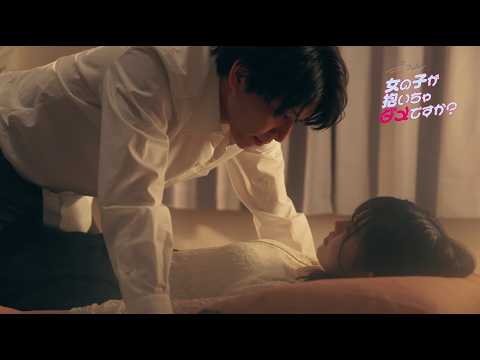
"Ladies on Top" Episode 2 Preview, March 6, 2026. Click to watch on YouTube.
This metaphor shifts the focus of pleasure from bodies to exchange.
It sidesteps the traditional male gaze and asks:
- How does desire usually get filmed?
- How do you film a man's pleasure?
- Whose pleasure deserves the close-up?
The result is a scene that feels surprisingly comfortable, precisely because it prioritizes the dynamic over the anatomy.
What "Bad" Actually Means
On the surface, it's a rom-com. Underneath, it's an autopsy of what happens when you stop pretending.
Takayuki and Mizuki are challenging what "good" looks like. In a world of rigid scripts, their honesty is their "badness."
That badness is presented calmly, without irony or the pornographic frame usually forced upon it.
This is the deeper meaning of BAD. It's not about being a villain, it's about the quiet subversion of refusing a role that doesn't fit.